Short answer
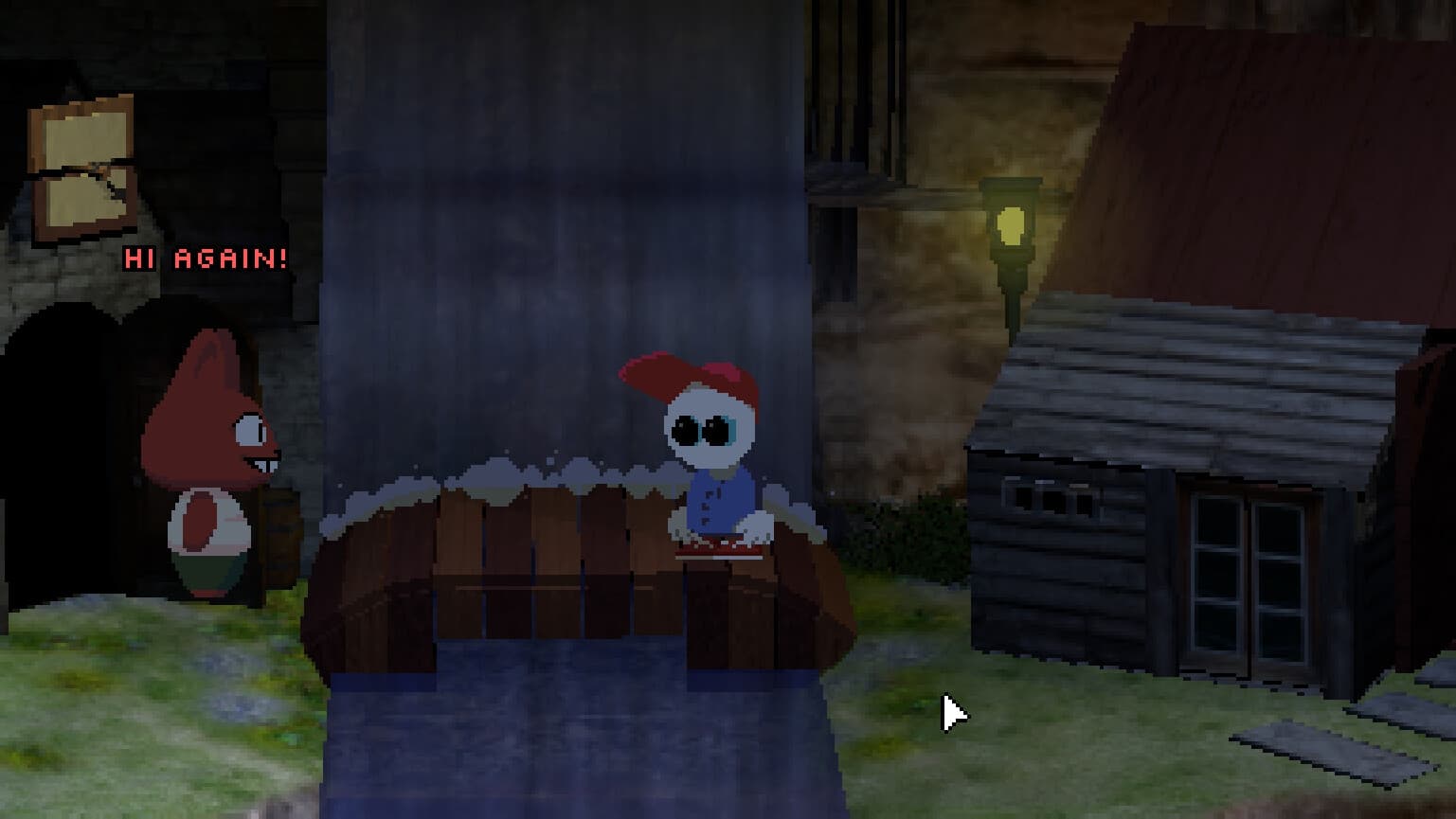
The Endacopia game is a single-player point-and-click puzzle adventure developed and published by Andyland. It follows Mellow, a young boy who has lost his senses and is trying to escape an uncomfortable home, through a surreal world that combines old computer-edutainment imagery with underlying horror. The full Windows version was released through Steam on July 27, 2026.
This is not a conventional adventure made only of static conversations and inventory combinations. Steam describes free choice over which area to explore next, conversations with strange individuals, collections of tools and other objects, varied minigames, animated background gags, hidden secrets, and first-person monster fights. The result is an exploration game that repeatedly changes how the player reads and controls a scene.
Players who only want the premise can begin without reading a full plot summary. Mellow's missing senses, the unusual home, and the invitation to investigate are the confirmed starting context needed to understand the opening. Later identities, area outcomes, and endings are deliberately left to the site's walkthrough and ending pages so this overview remains spoiler-light.
The store places the title in Adventure and Indie categories and uses tags such as point and click, puzzle, psychological horror, surreal, exploration, multiple endings, and choices matter. User-defined tags are useful orientation rather than a substitute for the developer's own description. The safest summary is therefore a nonlinear puzzle adventure with horror, conversation, action interruptions, and optional discovery.
How exploration and puzzles work
The central activity is examining environments, choosing interactions, talking to characters, and using collected objects to unlock progress. Steam says players can decide which area to explore next in whichever order they prefer, making the structure nonlinear even though the story has defined chapters and goals. A closed route may therefore be waiting on information or an item found in another accessible area.
The official description groups the inventory under tools, toys, gadgets, and trash, which signals that an ordinary-looking object may still have a designed use. Conversations can help a quest or complicate it, and minigames interrupt the standard inspection loop with their own rules. Animated background gags reward optional clicking, while secrets invite players to test details that are not required for the most direct route.
The collected reference also describes switching among looking, touching, and speaking when interacting with the world. That distinction matters because the same character or prop can respond differently depending on the chosen action. Exact controls and route instructions belong on the tips and walkthrough pages, but the important overview is that observation, dialogue, item logic, and physical movement all contribute to progression.
The structure also supports more than one kind of solution pressure. Some rooms ask the player to notice an environmental relationship, others connect a carried object to a later target, and hostile encounters introduce timing. The collected material does not establish that every boss has every possible resolution, so specific defeat or peaceful routes are left to verified boss pages.
Combat, comedy, and horror
Steam explicitly includes first-person encounters where Mellow uses his bare fists to block, dodge, and punch monsters. These sequences are specialized encounters inside the larger adventure rather than evidence that Endacopia is primarily a fighting game. Players should expect puzzle reading and exploration to remain the main framework, with combat changing the pace when a hostile creature appears.
The visual presentation is described as reminiscent of early computer edutainment games, but the same official sentence warns of underlying horrors. That contrast supports playful conversations, colorful animation, and absurd objects without removing the darker material beneath them. It is better to describe the game as surreal puzzle adventure with comedy and horror than to reduce it to a harmless retro parody.
The developer's mature-content notice names body horror, psychological horror, distressing imagery, blood, violence, death, drugs, and jump scares. Those are confirmed content categories from the store listing, not guesses based on screenshots. Players sensitive to those subjects should treat the apparently child-friendly visual language as presentation rather than a complete age or comfort guide.
Comedy remains part of the experience because Steam promises strange conversations, unusual carried objects, and animated background gags alongside the horror. The collected reference calls the game comedy horror, but that label comes from a community-maintained article rather than the official category block. This page can confirm the tonal contrast without claiming that one external genre label is Andyland's sole definition.
PC release and listed features
Steam lists the released game for Windows with Andyland as both developer and publisher. The store marks it as single-player and includes Steam achievements and Family Sharing among its platform features. A separate demo remains linked from the main listing, so the preview and purchased release should not be mistaken for the same application or save context.
The language table in the captured listing shows English interface text, full audio, and subtitles. No additional supported language is confirmed by that table, even though community translation projects may exist elsewhere. Any current official localization beyond English is To be confirmed and should not be inferred from Steam's website navigation languages.
The store also labels Steam Deck compatibility as Playable rather than Verified. That status confirms a platform assessment but does not establish perfect controller behavior or eliminate setup differences. The dedicated Steam Deck support page owns those device questions, while this overview records only the status visible in the collected official listing.
Steam's minimum section lists modest processor, memory, graphics, DirectX, and storage requirements, but it does not publish a recommended configuration in the captured page. The same listing warns that the current Steam client supports Windows 10 and later even though legacy systems appear in the game block. Modern client support should therefore guide installation planning, while exact performance on a particular computer is To be confirmed.
Confirmed facts and open questions
The strongest facts in the collected material are the official description, named developer and publisher, release date, Windows platform, listed features, content warning, and system requirements. The Wikipedia capture adds a broader plot summary and production fields, but it is community-maintained rather than an Andyland statement. Details supported only by that page are not promoted here as official production claims.
A short Andyland video says the game was finished but still needed polishing before its summer release. That statement documents a late development stage, while the Steam release record supplies the date that ultimately matters to players. It does not provide an exact completion date, budget, team size, sales total, or development cost, so those values remain To be confirmed.
This page also avoids repeating live review counts, current price, and recent player totals captured from Steam. Those fields change and do not answer what the game is. For route spoilers, playtime planning, character profiles, and the difference between the demo and full game, use the related pages that own those narrower search intentions.